
Movie title: “virgin Blade”
Duration: 1:20mins 39s
Production Company: MKN productions
SCREENWRITER: Chinepoh Corson
CINEMATOGRAPHER: Mini Collins
ARTISTIC DIRECTOR: Deric Nji Manju
Producer: Nkwah Kingsley
DIRECTOR: Chinepoh Corson
The diverse and multicultural mélange of traditions unique to a people is sometimes a blessing and a curse when basic human social rights are inhumanly violated. It is on this note that despite the advent of modernity and evolution in the re-adaptation of some traditional practices pertaining to some cultures in Africa; others have resisted the need for modifications to suit our present dispensations. It is on these wheels that the above narrative aligns itself to the perspectives of our contemporary society to Say a fat “NO to breast ironing and female genital mutilation”.

This is a theme that has been previously handled by other filmmakers but fell short of the most important elements which this present narrative attempts to resolve to a greater extent. On a personal note, this theme is too strong with a powerful message and time to redress the aftermath of this very inhuman practices. Its social, psychological, moral and spiritual undertones expose the victim to uncontrollable sexual desires which is a goal behind the practice which could lead to multiple sexual partners and could expose the victim as a vector of disease transmission.

Virgin (unused) Blade (tool) could be referring to the locally poorly sterilized tool used to carry out the ugly practice of mutilation. Thus virgin Blade is a beautiful narrative conceived by Nkwah Kingely (producer), written/Screen played by Chinepoh Corson (Director); staring Syndy Emade (Oneke), Epule Jeffery (Agbor), Nchifor Valery (Bate), Syriet Che (Efudem), Supported by Nchando Glory (Avangha) Mefah Melissa (Arrah), Ngongang Elisbeth (Ma Etangkongho), Azah Melvin (Ebot) and Featuring Fortabong Marinus Fotoh (Pa Mengot), Nkwah Kingsley (Okang), Chi Grace Bih-Princess Adama (Ma Bessong), Quinny Ijang (Ebob), Ghangni Melvis (Manyi), Nabangi Nancy (Bessem) and Mbando Comfort-Syndy Stainless(Mayor).

Traumatized by the cruel and crude old fashioned traditional practice in her village of birth Oneke returns from the city to request school fees from her father Pa Mengot; antagonized by her stepmother Avangha she seals through her dilemma into the romantic hands of her village admirer Bate. His whim of protection over her leaves a huge punch on the face of the unapologetic village warrior-Agbor at the market square. This action fuels animosity amongst the parties adding to the already existing war against the much practiced traditional breast ironing and genital mutilation spear-headed by Oneke who decides to stay back in the village to advocate against the inhuman practices despite a huge village resistance.

The village head in an attempt to quell down Oneke’s strive to overturn the tides instead stirs up her ambitions through her physical attempt to prevent her friend’s daughter-Arrah from being mutilated. This fifteen years old daughter of Agbor and a host of her age mates are brainwashed by their parents with traditional backing in a myth of making them “real women”. Drowned with love and being a man of justice, Bate is dissolved with Oneke’s advocacy to the extent of attempting to escape with Arrah which lands them unfortunately in the hands of Agbor and his village gang. Their blood is spilled for an ultimate price to liberate the young girls of that village from the fangs of the painful traditional practice. The hunter becomes the hunted when Arrah dies in the process of forcefully chopping off her clitoris unraveling in the eyes of her own mother-Efundem; pushes her and Agbor to cross the red line for the practice and align themselves with Oneke’s wish to end the practice poised with a bitter confession against the practice unfortunately over the triple corpses of the advocates.
The well-crafted piece of art as narrated by Nkwah Kingsley, written for the screen by the experienced writer/actor/director-Chinepoh Corson whose stylistics in telling the story with Mini Collin’s on-point cinematography enhances correlation of events, mise en scene, design and composition of the overall aesthetics of the movie. Despite a few setbacks in a few overexposed scenes, inconsistent fluid camera movements, few aerial shots, image jerks like in any other film, amidst the challenges we may be aware of shooting hinterland, the cinematographer succeeded to capture balanced realistic pictures outdoor which constituted over ninety percent of the movie.
Coherently, the director’s consistency in revealing progressive events orients the audience to glue to the screen as he keeps on bringing familiar images to the screen that incites originality in the minds of those whose story is being told. Despite much disparity in the films setting which could be misconstrued for a different ethnological setting thus misrepresenting some social and cultural aspects of the real setting which the narrative is inferred to have happened is unveiled by the names of characters used; the director still was able to retain much verisimilitude through his choices of shots, angles, props choices, costumes design and originality in the language used. Pidgin English used to realize this narrative I think was the best decision the director took bearing in mind the urgency, sensitive and very important message contained in the narrative which addresses those involved in the practice directly.

The artistic director’s understanding in assembling the creative team is envisaged in the overall feel of the movie. The mild make-up which isolates each character at some points of the narrative is not to be under looked, the hair-design, the language mentioned above, locations, props, production design, sound, light and soundtrack/music by Mr. Leo; which is very emotional but fails to completely carry the message to the intended audience as he passionately passes the beautiful message in lamso a language not understood by the audience the movie is intended to address. I think the wholeness of a movie includes the diegetic and non-diegetic elements of a narrative in which this music falls; in this case, traditional music of the people being addressed would have been a better option rather. This will give room for the filmmaker to use non-diegetic elements as diegetic elements in the narrative thus gaining screen time to pass the deeper aspects of the narrative in lyrical form through a emotional melody.
The finishing of the movie is exceptionally well done; Achille Brice’s years of mastery and experiences uphold the standards of how the final product is to be appreciated. His ability to create suspense with images and sound in the plot and maintaining consistency in the cuts is a rare aspect to find only in a highly skilled editor like him. This could be seen in the movie when Oneke was summoned to the palace for sanctions for trying to incite young girls not to accept to be mutilated. He uses sound and some jump cut technique which I presumed enough footage weren’t available to properly cut out that scene to bring meaning and emotions required to sustain the consistency of the narrative. Again you see how he uses sound to evoke tension when Oneke was planning her escape with Arrah encouraged by Bate. I can’t leave out the unique film feel backed by his color correction and grading abilities to give the images its thick color luminance. In all, the editor succeeded to transform the raw footages on his table to a full-blown award-winning masterpiece.
The college of actors that populated this outstanding masterpiece interpreted each segment of the narrative with passion and consistency thus archiving verisimilitude in its entirety. Oneke’s (Syndy Emade) performance is at its peak in this tragic-epic story. Unlike the beauty queen she’s always been attributed to in most of her movies, we see a born-again character whose original self in the movie depicts the director’s mindset about how the character should be revealed. She presented her case to Efundem (Syriet Che) in a subtle and aggressive manner, “Efundem, How you go gree make ya pikin go through all this suffer?, you don forget how the ting di hurt?” Efundem replies “Weti you know about dis ting?” Oneke pondered for a second, “weti me I know about dis ting?, I fit only tinkam”. Here you see how her Transcripted pidgin dialogue ties with her countenance which retains their relationship as friends at the same time punch strong on a traditional aspect which Efundem will never dare to discuss it elsewhere. Paired up with multiple award-winning actors like Bate (Nchifor Valery) and Epule Jeffery (Agbor) similarly interpreted their contrasting character traits with passion.

Agbor’s offensive tendencies acclimatize his position as the created antagonist for this narrative. Being around the actor, he was able to bring the drama on-screen amidst serious issues in the narrative like when he received a punch from Bate over his resistance to letting go Oneke at the market arena. He vividly compresses imagination, facial expression, body language, memory and vocal technique to react to the punch before hallucinating aloud, “Agbor na papa!! Then his guys together with him answered while looking stern at the direction of Oneka and Bate, “man weh e no knowam callam small boy ooooo”. At this point Epule raised his characteristic personal scores as an actor with this unique and intrinsic performance.
Bate a formidable support to the protagonist ignores his relationship with his village folks to align himself with Oneke’s advocacy despite knowing that Agbor was in charge within their jurisdiction. His pro-activeness to align himself with the protagonist makes me think that character Bate was feed-up with the current situation in that village and was waiting for an opportunity which Oneke opened the leeway for him on a platter of gold. This movie highlights a new Nchifor, a true character who doesn’t have the pressures of manipulating the queen’s language to be well explicit as he effortlessly slams each of his appearances on screen. I think his awards are awaiting him as festivals stumble on his dedicated character interpretation. Despite all the accreditations on that character, he had some shortcomings maintaining consistency in the character persona all through the narrative. Notwithstanding, I think his cast for this role is indisputable.
Efundem on her part garnished the narrative with realistic elements as a screen diva to wholly convince the audience we are in the village. Walking on bare feet, waived basket she used to deliver Oneke’s food reminisce a lot of nostalgic feelings coupled with her local parlance. Efundem jokes with Oneke in this line when she comes visiting “no tell me say you don go town go di rub ya groundnut oil”; here you see the perfect use of vocal technique, facial expressions, and body language to reveille realism in a character. It looks simple like humor but can only come from veteran performer like Syriete Che. Her daughter’s (Arrah) performance added flesh to the required tension the narrative needed to transit at the movie’s high point.

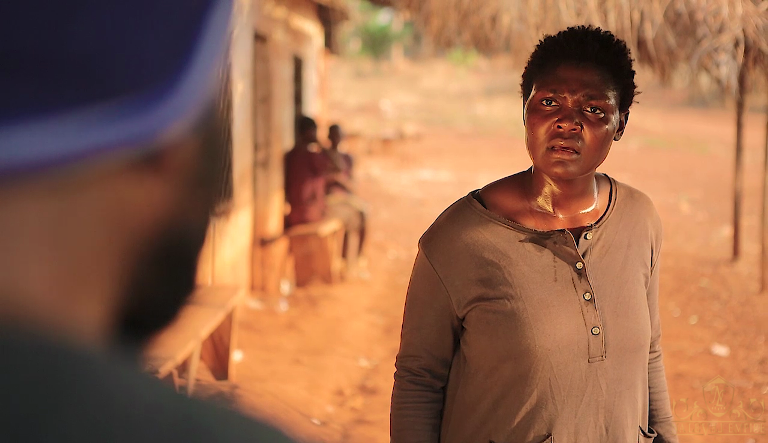
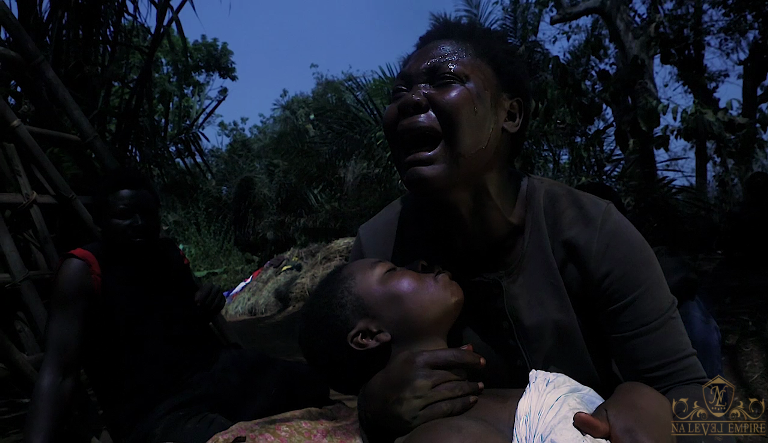
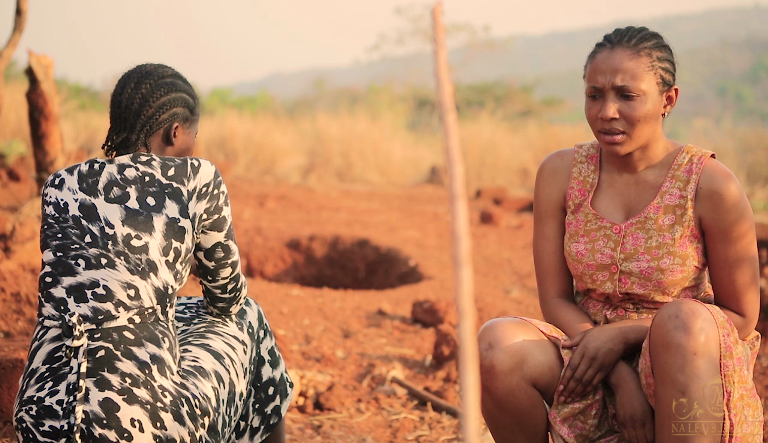
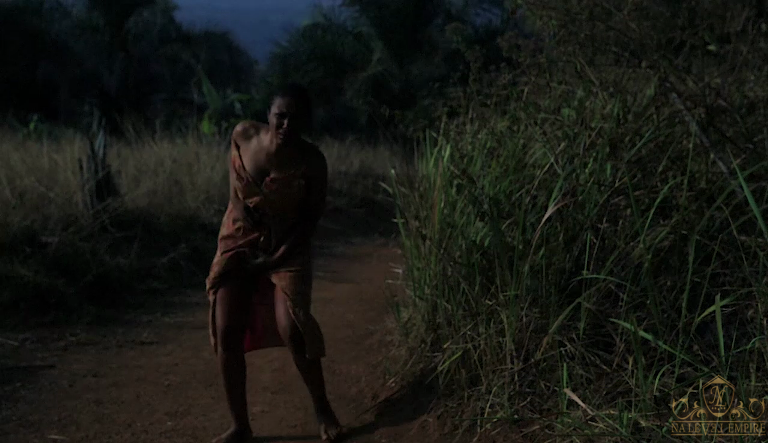
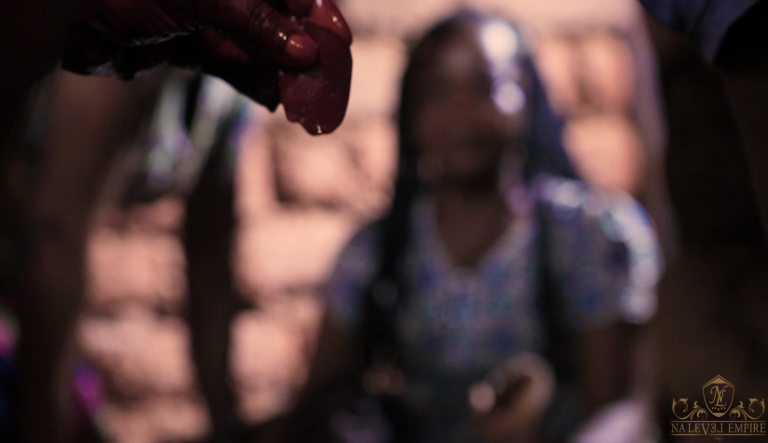
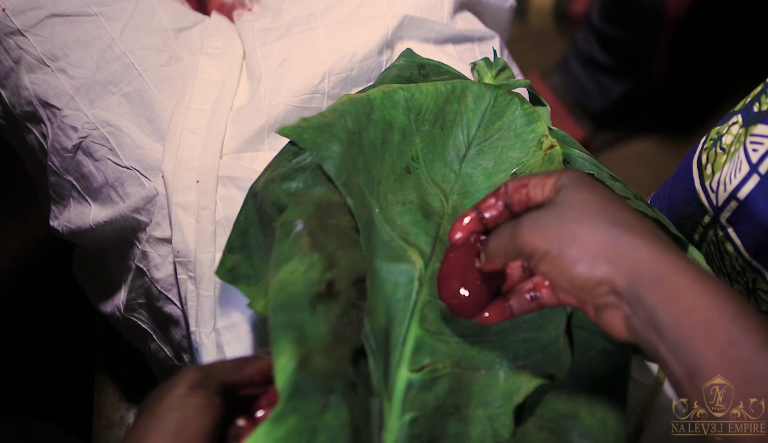
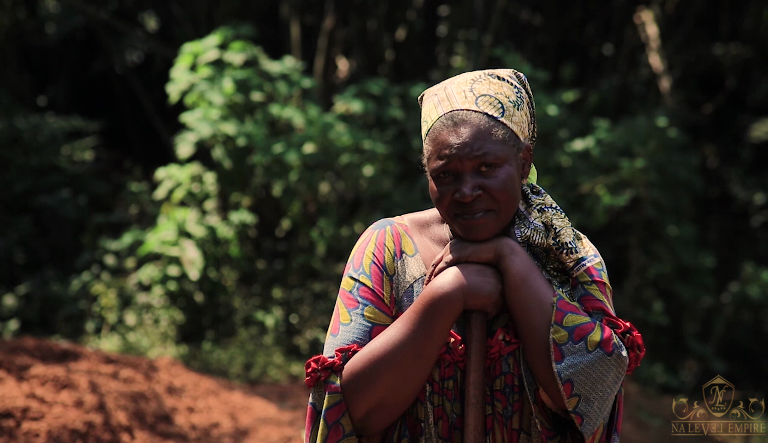
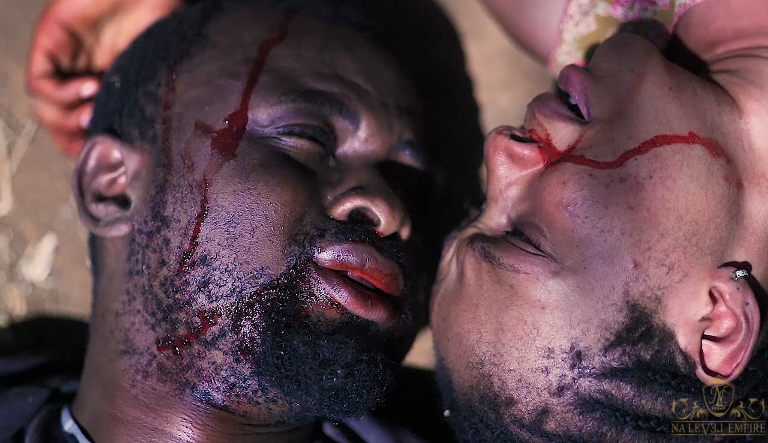
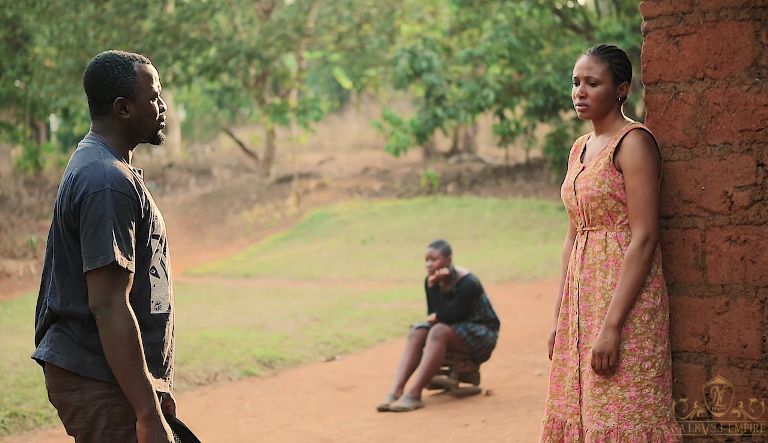
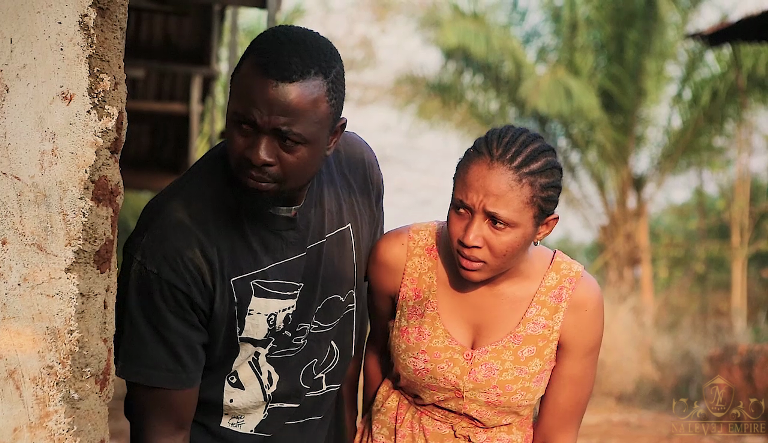
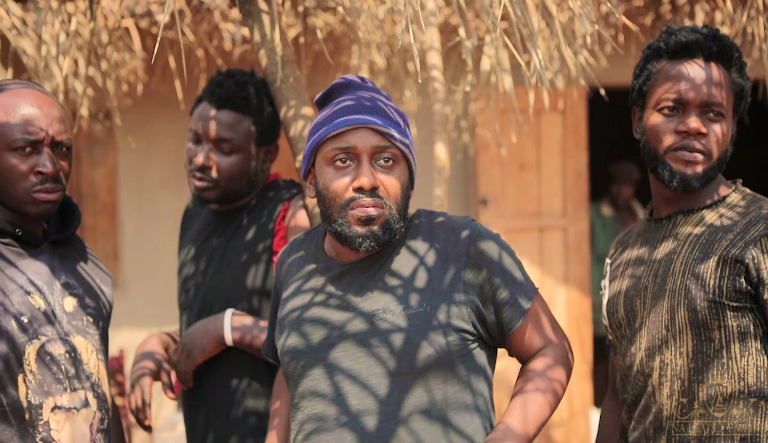
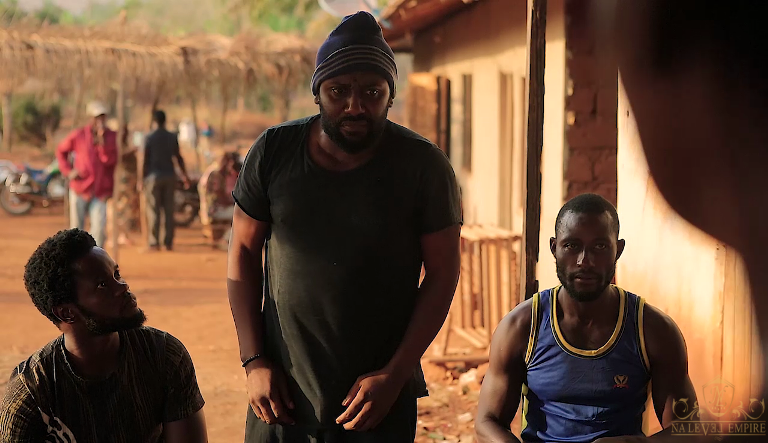
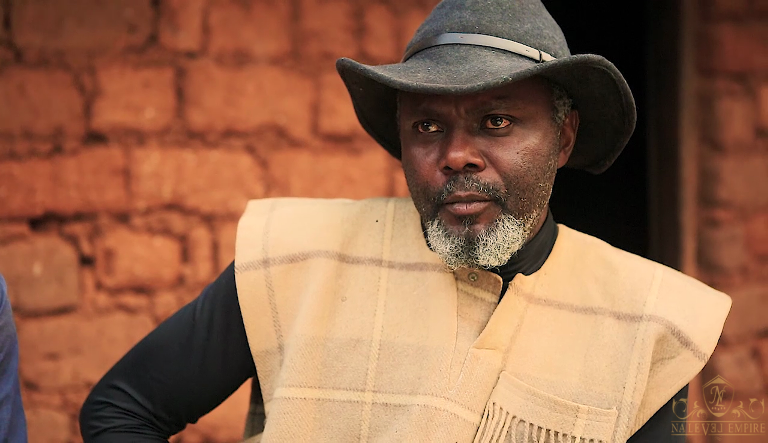
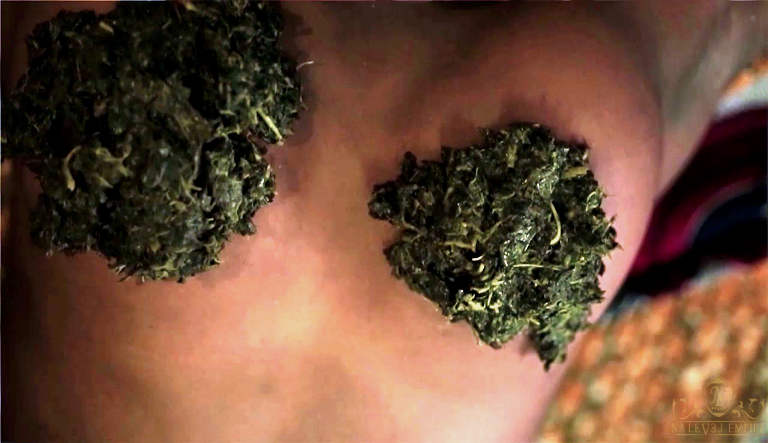
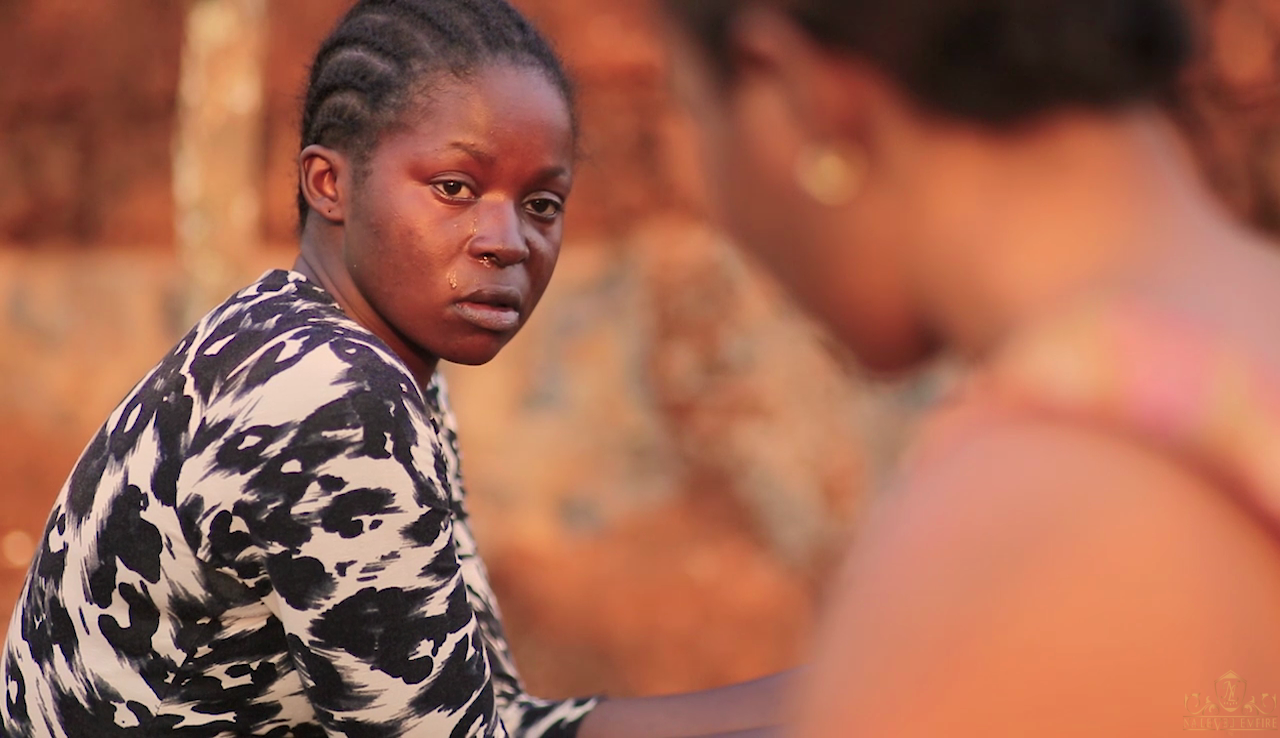
Furthermore, this 120 minutes narrative is able to address the female genital mutilation and breast ironing problematic; a very sensitive issue which is currently still practiced in most African communities and Cameroon especially despite its very low alarm rate. The filmmakers of Virgin blade were able to use a complex narrative and transformed it on screen while staying focused on the chosen theme at the same time highlighting certain cultural setbacks which spring up as aftermath like encouraging young girls to have multiple sexual partners, backed by this dangerous malpractice which also exposes these victims to psychological trauma in the course of life. The movie ended on a controversial note to me discordantly prior to the protagonist overtaking her vision till the end with her support staff Bate, the narrative instead recounts both party’s death including Efundem’s daughter whom they tried to save in the process. From my analysis, I think the director wanted to leave the argument open for the audience to passionately choose which side to follow bearing in mind that Agbor and Efundem’s decision to cross the carpet may subsequently have nothing to do with the customs and tradition of that village.
Conclusively, I Personally think I will join my voice with these filmmakers to denounce vehemently this malpractice at the same time encouraging film enthusiasts, filmmakers, civil societies, government institutions like the ministry of women affairs, non-governmental organizations and most of all communities where these practices are still upheld to recommend this beautiful piece of art from Chinepoh’s gallery for information, research, education, and entertainment to the world.
BY TANWIE ELVIS “De Dadies”